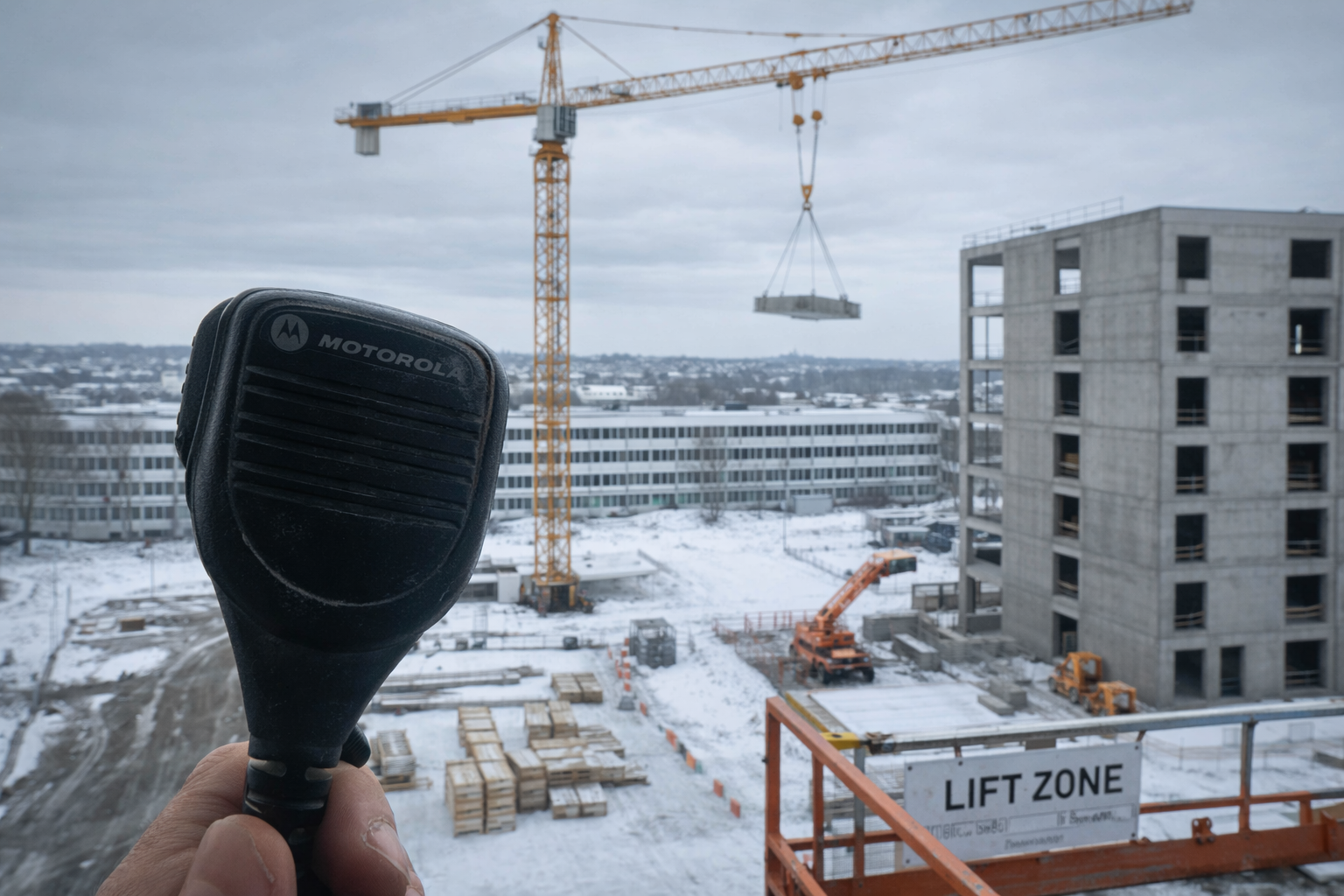
Signal plan on the construction site: radio, wind limits, and lift plan in practice
Practical guide to signal plans on the construction site: roles, radio, wind limits, and lift plan, so crane work starts safely and without unnecessary waiting time.
Signal plan on the construction site: radio, wind limits, and lift plan in practice
TL;DR: Most stops in crane work are not caused by the crane, but by unclear communication. A clear signal plan, fixed radio rules, and agreed wind limits remove bottlenecks from day 1.
When lifts are coordinated under time pressure, communication is a safety function, not a detail. Unclear roles between crane operator, signaller, and site management create waiting time, errors, and unnecessary stops.
At KSR CRANES, we provide experienced crane operators for tower cranes, mobile cranes, and crawler cranes throughout Denmark. We do not rent out the crane itself.
Why a signal plan is essential
A signal plan ensures that everyone works with the same commands, the same channel, and the same stop procedure. It reduces risk, minimises misunderstandings, and makes startup faster.
Practical checklist before the first lift
- Designate one primary signaller and one backup.
- Agree on radio channel, call signs, and test the connection.
- Define a stop word that everyone respects immediately.
- Confirm the division of responsibility between crane operator, rigger, and site management.
- Review lifting zones, no-go areas, and access routes.
- Clarify wind limits according to crane model, manufacturer requirements, and site rules.
- Agree on when a lift is classified as critical and requires a lift plan.
- Ensure that all relevant persons have access to the same plan version.
Radio protocol that works in practice
- Keep commands short and standardised.
- Use "repeat and confirm" for critical messages.
- Avoid parallel instructions from multiple persons simultaneously.
- If the signal is unclear: stop the lift and clarify before continuing.
Wind limits: avoid costly wrong decisions
Wind must be assessed based on the specific crane, load type, and working area. Always use the manufacturer's documentation and the site's safety procedures as a basis. When in doubt: stop and reassess the lift.
When should there be a lift plan?
A lift plan should be used for complex or critical lifts, e.g., close to installations, in limited space, heavy/special items, or lifts with high consequences if something goes wrong. The plan must be reviewed and understood by all key persons before startup.
Typical errors that stop production
- Unclear responsibility for signalling.
- Radio without fixed channel discipline.
- Missing stop procedure.
- Critical lifts without a shared plan.
- Wind assessment based on assumptions instead of agreed limits.
Ready for startup without unnecessary waiting time?
We are happy to have a short, free, and no-obligation conversation about your site, crane type, and schedule.
Call: +45 23 26 20 64
Enquiry: /lej-en-kranforer
FAQ
Do you also rent out the crane itself?
No. KSR CRANES provides crane operators for your existing crane solution.
Can you help with a quick startup?
Yes. When we receive correct information about crane type, roles, communication, and lifting needs, we can often plan a quick startup.
Is a signal plan necessary for smaller projects?
Yes. Even smaller projects experience fewer stops and better safety with a simple, clear signal plan.
Need a safe and efficient crane operation setup?
If you need reliable crane operators for your next project, we are ready for a short, no-obligation conversation.